

Last Updated: November 10, 2026
Quick Summary
To learn how to make syrups for cocktails, combine sugar and water by volume, starting with the standard 1:1 simple syrup of one cup sugar to one cup hot water, stirred until clear and cooled before bottling. For a thicker syrup, use a 2:1 rich simple syrup of two parts sugar to one part water.
- Measure syrup ingredients by volume, not by eye, and stir until the liquid runs clear.
- Rich 2:1 simple syrup is thicker, sweeter, and slower to spoil than 1:1 syrup.
- Simmer fruit syrup gently for 10 to 15 minutes, no longer, then steep off the heat.
- Steep delicate herbs off the heat for 15 to 20 minutes before straining.
- Refrigerated 1:1 simple syrup lasts about 3 to 4 weeks in a clean airtight container.
Table of Contents
- The Basic Ratio Behind Every Great Cocktail Syrup
- How to Make Fruit Syrup for Cocktails Without Losing the Flavor
- How to Make an Infused Syrup for Cocktails With Herbs and Spices
- Simple Syrup Flavors for Cocktails That Actually Taste Like Something
- No-Heat and Alternative Sweetener Methods Worth Trying
- How Long Does Homemade Cocktail Syrup Last?
- Troubleshooting Syrup Problems Before They Ruin the Drink
- Stock Your Bar Cart With House-Made Syrups
- Frequently Asked Questions
The Basic Ratio Behind Every Great Cocktail Syrup
Learning how to make syrups for cocktails comes down to one ratio: sugar to water. Get that right and every drink you build afterward lands where you want it. At DEVIANT Cocktail Club, we build our house-made syrups on the same principle.
Cocktail syrup is a sugar-and-water solution used to add sweetness and body to a drink without the grit of undissolved sugar. The standard is equal parts by volume, which dissolves fast and mixes evenly into cold liquid.
Three rules cover almost everything:
- Measure by volume, not by eye
- Stir until the liquid runs clear
- Cool completely before bottling
Get those three right and the rest is flavor work.
1:1 Simple Syrup: The Everyday Workhorse
Equal parts sugar and water is the default. One cup granulated sugar, one cup hot water, stir until dissolved, cool, bottle. That is the whole recipe.
This version suits most sours, daiquiris, and iced tea drinks. It blends into cold liquid without seizing up. Make it in small batches.
2:1 Rich Simple Syrup: When You Want Thickness
Rich simple syrup uses two parts sugar to one part water. The result is thicker, sweeter, and slower to spoil.
Use rich syrup when you want body. It shines in stirred drinks, spirit-forward cocktails, and anything served over a big cube. A little goes a long way, so start with half the amount your recipe calls for and taste.
How to Make Fruit Syrup for Cocktails Without Losing the Flavor
Fruit syrup fails when you cook the fruit too long. Heat kills the fresh notes, and you end up with something that tastes like jam, not berries.
Here is the method we recommend:
- Combine equal parts sugar and water in a saucepan over medium heat.
- Stir until the sugar dissolves completely.
- Add fruit and drop the heat to low.
- Simmer gently for 10 to 15 minutes, no longer.
- Take the pan off the heat and let the fruit steep as it cools.
- Strain through a fine-mesh strainer, pressing lightly on the solids.
- Refrigerate in an airtight container.
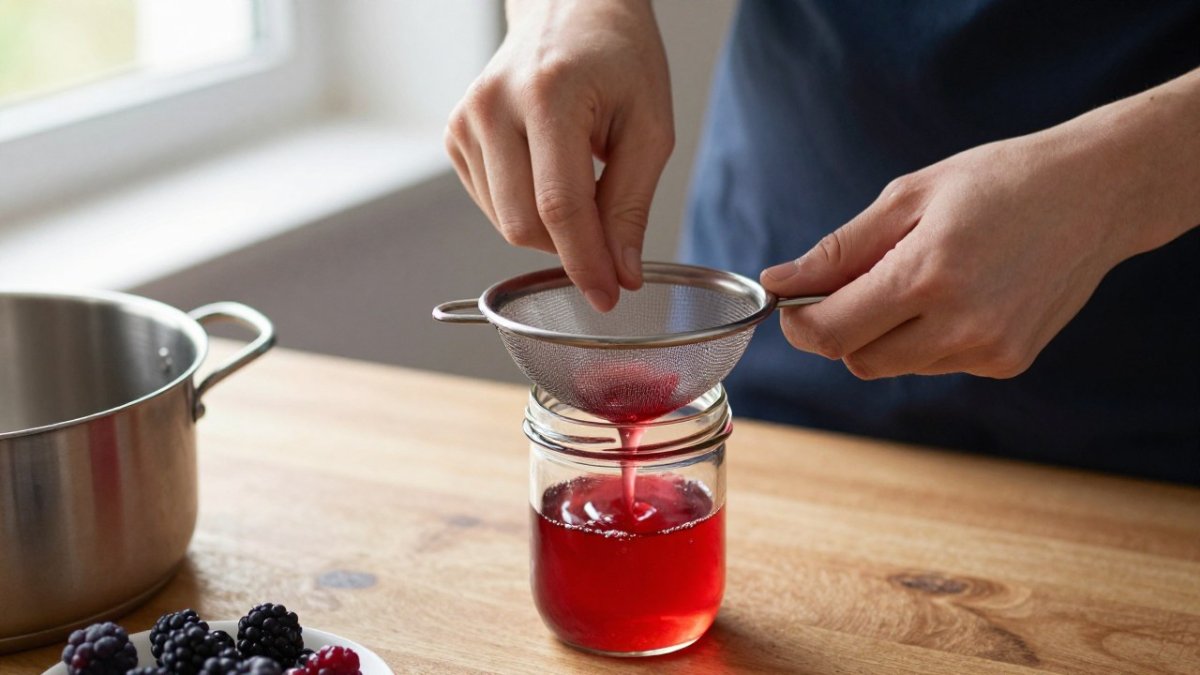
Rhubarb, raspberry, and peach all work well with this method. Taste as you go.
How to Make an Infused Syrup for Cocktails With Herbs and Spices
An infused syrup for cocktails is simple syrup steeped with herbs, spices, or both. The trick is timing. Herbs turn bitter fast, while whole spices need longer to open up.
Try these pairings:
- Rosemary with grapefruit or gin drinks
- Sage with bourbon and apple
- Cinnamon with rum and coffee cocktails
- Vanilla with almost anything dark and stirred
For delicate herbs, steep off the heat for 15 to 20 minutes, then strain. For whole spices, simmer gently for 10 minutes and let the syrup cool in the pan. Always strain before storing.
Simple Syrup Flavors for Cocktails That Actually Taste Like Something
Weak syrup is the most common complaint we hear. The fix is concentration, not more sugar.
A few simple syrup flavors for cocktails that hold their own:
- Vanilla bean syrup: split one bean, steep it in warm syrup for 30 minutes
- Cinnamon syrup: simmer two sticks for 10 minutes
- Citrus syrup: add wide strips of peel off the heat, steep 20 minutes
- Coffee syrup: stir strong brewed coffee into cooled syrup to taste
- Tea syrup: steep strong tea bags in warm syrup for 10 minutes
Label every jar with the date and contents. You will thank yourself later.
No-Heat and Alternative Sweetener Methods Worth Trying
Heat is a tool, not a requirement. Three preparation methods cover nearly every syrup you will make, and each one is right for a different job.
Stovetop (hot process). Dissolve sugar in simmering water, then steep or simmer flavorings. This is the fastest way to fully saturate a 2:1 rich syrup and the only reliable method for whole spices like cinnamon and clove, which need sustained heat to release their oils.
Cold process (no-heat). Combine sugar and water in a sealed jar and shake or stir until the sugar dissolves. At a 1:1 ratio by volume this takes a few minutes of shaking; at 2:1 it can take considerably longer and may never fully dissolve without gentle warming.
Blender. Pulse sugar and water in a blender until the mixture turns clear. This is the fastest route to a fully dissolved 1:1 syrup and works well when you are scaling up a batch. Watch out: the blender aerates the syrup, so let it rest and settle before bottling or you will trap foam in the jar.
Substituting Alternative Sweeteners
Honey, agave, and maple are not drop-in replacements for granulated sugar. They contain more water, taste sweeter, and bring their own flavor, so the substitution is never 1:1.
- Honey: dissolve at roughly 3 parts honey to 1 part water by volume to reach a pourable consistency close to rich simple syrup. Honey tastes noticeably sweeter than sugar, so start with about two-thirds of the sugar syrup amount a recipe calls for and adjust.
- Agave nectar: blends into water at room temperature with no heat, which makes it convenient for cold drinks. It is sweeter than sugar syrup, so reduce the volume and taste as you build the drink.
- Maple syrup: already a liquid with roughly the consistency of rich syrup, so it usually needs no dilution at all. Use it where its flavor belongs, whiskey, rum, and fall-spiced drinks, and cut the amount to account for its sweetness.
Because these sweeteners are sweeter per unit of volume, the practical rule is to build the drink with less syrup than the sugar version, taste, and add more only if the balance needs it. Over-sweetening is easy to fix with more spirit or citrus; under-sweetening is easy to fix with another splash. Adjust in that direction.
How Long Does Homemade Cocktail Syrup Last?
Shelf life depends on sugar concentration, water activity, and how clean the batch and container are. Higher sugar content ties up more water and slows microbial growth, which is why rich syrup outlasts simple syrup and why fruit and herb syrups, which add water and nutrients, spoil fastest.
A practical breakdown by type, refrigerated in a clean airtight container:
- 1:1 simple syrup: about 3 to 4 weeks. The most common failure is mold at the surface, so check before each use.
- 2:1 rich simple syrup: about 2 to 3 months. The higher sugar concentration is the reason it keeps longer.
- Herb and spice infused syrups: about 2 weeks. Fresh herbs introduce both water and plant material that spoil quickly; strain them out promptly after steeping.
- Fruit syrups: about 1 to 2 weeks. Fruit adds water, sugar, and nutrients, so treat these as short-lived and make them in small batches.
- Alternative-sweetener syrups (honey, agave, maple): roughly 2 to 4 weeks refrigerated. Honey in particular is prone to crystallization, which is harmless, warm the jar gently to redissolve it.
Container and Refrigeration Practice
Use a clean glass jar or bottle with a tight-fitting lid; glass is easier to sanitize and does not retain odors the way plastic can. Fill containers close to the top to limit headspace and oxygen exposure, and let syrup cool completely before sealing so condensation does not water down the surface. Keep every batch refrigerated, a cool, dark refrigerator is the single biggest factor in shelf life. Label each jar with the date and contents so you are never guessing.
Signs a Batch Should Be Discarded
Discard the batch, do not taste-test it, if you see any of the following:
- Cloudiness in a syrup that was previously clear
- Fizz, bubbles, or pressure when you open the lid
- A sour, fermented, or off smell
- Visible mold at the surface or around the rim
- A change in color or an unexpected thickness
Cloudiness can also come from impurities or from a syrup that was not fully strained, so judge it against how the batch looked when it was fresh. When in doubt, throw it out; the cost of a new batch is trivial compared with a spoiled cocktail.
For the garnishes you pair with those syrups, our guide on how to store craft cocktail garnishes covers the details that keep them fresh.
Troubleshooting Syrup Problems Before They Ruin the Drink
Most syrup problems trace back to one of four causes. Here is how to fix each:
| Problem | Likely Cause | Fix |
|---|---|---|
| Sugar won't dissolve | Water too cool | Warm gently and stir |
| Syrup tastes flat | Too little flavoring | Steep longer, add more |
| Syrup turned cloudy | Spoilage or impurities | Discard and start fresh |
| Drink tastes watery | Wrong syrup ratio | Use rich syrup instead |
Texture issues often come from the drink build, not the syrup. Our breakdown of stirring versus shaking cocktails explains which technique suits which drink. If your syrup-based cocktail looks cloudy in the glass, the double straining technique fixes clarity fast.
Stock Your Bar Cart With House-Made Syrups
Once your syrups are ready, the next step is putting them to work. Our guide on how to make craft cocktails at home walks through full recipes that use what you just made. A solid set of bar accessories for hosting rounds out the setup.
If you would rather skip the sourcing and the simmering, DEVIANT Cocktail Club delivers a monthly box with everything needed for 12 cocktails, plus original recipes and video tutorials. Shipping is free.
Our Dublin Martini Shaker with gold top is a good place to start building your kit. The cut-crystal body and polished gold-tone top make it a statement piece for any bar cart, and it handles martinis, margaritas, and sours with ease.

Building a home bar that actually delivers takes good syrups, the right tools, and a little practice. DEVIANT Cocktail Club makes that easier with house-made syrups, premium garnishes, and original recipes in every box, plus video tutorials that walk you through each drink. Get started with DEVIANT Cocktail Club and pour bar-quality cocktails at home.
Frequently Asked Questions
How do you make a syrup for a cocktail?
Combine equal parts granulated sugar and water in a saucepan over medium heat. Stir until the sugar dissolves completely, then let it cool before bottling. That 1:1 mix is your base cocktail syrup. For a thicker, sweeter version, use two parts sugar to one part water. Once cooled, store it in an airtight container in the refrigerator and use it to sweeten sours, old fashioneds, and just about anything else.
How long does homemade cocktail syrup last?
Rich 2:1 syrup generally keeps longer than simple syrup because of its higher sugar content, while fruit and herb-infused syrups are more perishable. Discard any syrup that shows cloudiness, mold, or an off smell.
What is the difference between simple syrup and flavored syrup?
Simple syrup is just sugar and water, used to add sweetness without extra flavor. A flavored syrup starts with that same base but gets fruit, herbs, spices, or other ingredients steeped into it before straining. Flavored versions let you add cinnamon, rosemary, or rhubarb notes directly to a drink. Both work in cocktails, but flavored syrups are more concentrated in character and usually have a shorter shelf life.
How do you infuse syrup for cocktails?
Warm your simple syrup gently, then add herbs, spices, or fruit and let them steep off the heat. Delicate herbs like sage or mint need only 15 to 20 minutes, while cinnamon or ginger can steep for an hour or more. Taste as you go, then strain through a fine-mesh sieve. For fruit, simmer the fruit into the syrup and mash it before straining to pull out maximum color and flavor.
