

Table of Contents
- Why Garnish Storage Makes or Breaks Your Cocktail
- How to Store Cut Citrus for Cocktails
- How to Store Fresh Herbs for Cocktails
- How Long Do Cocktail Garnishes Last?
- Home Bar Garnish Station Setup
- Make-Ahead Prep and Service Workflow for Garnishes
- Common Garnish Storage Mistakes to Avoid
- Frequently Asked Questions
Last Updated: October 18, 2026
Why Garnish Storage Makes or Breaks Your Cocktail
A limp mint sprig or a dried-out orange wheel tells your guests everything they need to know before they take a sip. Learning how to store craft cocktail garnishes is the difference between a drink that looks bar-quality and one that looks like an afterthought.
At DEVIANT Cocktail Club, we build garnish into every box for a reason: it is the finishing touch that signals care.
Most home hosts prep garnishes hours ahead, then watch them wilt on the counter. That is the problem this guide solves.
Below, we show you exactly how to store each type of garnish, how long it lasts, and how to set up a station that keeps everything crisp through service.
How to Store Cut Citrus for Cocktails
Cut citrus is the workhorse garnish, and it fails in predictable ways: the flesh dries and hardens, the pith turns bitter, the peel loses its oils, and stacked pieces crush under their own weight. The fix is to match the cut to the container, control surface moisture, and keep the fruit cold without letting it sit in its own juice.
Match the Cut to the Container
| Cut | Best Container | Lining | Fridge Life | What Goes Wrong |
|---|---|---|---|---|
| Wheels and wedges | Wide, shallow airtight container | Single layer of paper towel | 1-2 days | Stacking crushes flesh; juice pools and softens pith |
| Peels and twists | Small airtight container | Slightly damp paper towel | 1-2 days | Dries out and loses aromatic oils within hours |
| Supremes and segments | Shallow covered container | Paper towel, no stacking | 1 day | Membrane tears and fruit weeps |
| Juice | Covered container | None | 1 day | Oxidation dulls flavor |
The container should fit the cut, not the other way around. Wide, shallow containers protect wheels and wedges from crushing. Small, deep containers suit peels and twists. Label each container so you are not guessing mid-service.
The Paper-Towel Mechanism
A paper towel does two jobs: it wicks away surface moisture that would otherwise soften the pith and promote mold, and it cushions the fruit so the flesh does not press against the container wall. Replace the towel when it is visibly damp, usually once per service day. Do not wrap citrus tightly in plastic wrap; trapped condensation is the fastest route to slimy wheels.
Peels and Twists Need Different Handling
A citrus peel is mostly oil glands in the outer layer of the skin. Once cut, those oils evaporate and the peel turns leathery. Store peels in a small airtight container with a barely damp paper towel, damp enough to slow evaporation, not wet enough to grow mold. Express a peel over the glass within a day of cutting; after that the oils are noticeably weaker.
Cut Close to Service
A common mistake is cutting citrus too far ahead. Cut closer to service when you can. For parties, cut wheels the morning of and hold them cold until guests arrive. If you must cut the night before, keep wheels in a single layer, drain any pooled juice before service, and plan to use them within the first hour.
Safe Holding for Cut Citrus
Cut citrus is a cut produce item and should be held cold, at or below 40°F, until the moment you garnish a glass. Do not leave a tray of wheels on the bar for the length of a party. Pull small batches, keep the rest refrigerated, and discard any piece that is slimy, tacky, or smells sour. For safe holding habits, review USDA food safety guidance on refrigerated storage.
How to Store Fresh Herbs for Cocktails
Herbs are the most fragile garnish on your bar, and they fail for one reason: moisture management. Too wet and they rot; too dry and they wilt. Each herb sits at a different point on that spectrum, so a single wrap-and-refrigerate rule will ruin at least one of them.
The Moisture-Airflow Balance
A herb leaf is still alive after cutting. It respires, which means it releases moisture and needs a little airflow to avoid trapping that moisture against the leaf. A sealed, bone-dry container dehydrates herbs; a sealed, wet container suffocates them. The target is a barely damp barrier plus a loose seal, enough humidity to slow wilting, enough airflow to prevent rot.
Herb-by-Herb Storage
| Herb | Prep Before Storing | Container | Fridge Life | Quality Check |
|---|---|---|---|---|
| Mint | Trim stems, do not wash | Damp paper towel, loosely sealed container | 1-2 days | Crisp leaves, no dark spots |
| Basil | Do not wash, keep dry | Dry wrap, cool spot away from coldest shelf | 1-2 days | Green, no brown edges |
| Rosemary | Store dry | Breathable container or glass of water | 3-5 days | Firm stems, strong scent |
| Thyme | Store dry | Breathable container | 3-5 days | Firm stems, strong scent |
| Cilantro | Trim stems, stand in shallow water | Loose bag over leaves | 2-3 days | No yellowing or slime |
| Dill | Trim stems, do not wash | Damp paper towel, loose seal | 1-2 days | Feathery, no wilting |
Mint: Trim the stems, wrap in a damp paper towel, and store in a loosely sealed container.
Basil: Basil bruises and browns in the cold. Wrap it dry and use it within a day or two.
Rosemary and thyme: Sturdy and forgiving. Store sprigs dry in a breathable container or a glass of water, and they hold for several days.
Cilantro and dill: Treat like mint but with a shorter window.
Wash Only at Use
Wash herbs only right before you use them. Wet leaves rot faster and cling together, and water trapped in a leaf cluster is the single most common cause of slimy mint. If you must wash ahead, dry thoroughly, a salad spinner followed by a paper-towel blot, before storing.
Safe Holding and Replenishing
Keep herb garnishes cold until service, and pull only what you need. A common pattern is to hold a small service batch at the station and replenish from the fridge every hour or two rather than leaving the whole bunch out. Discard any sprig with dark spots, slime, or a sour smell. For safe holding habits, review USDA food safety guidance on refrigerated storage.
How Long Do Cocktail Garnishes Last?
Most cut garnishes last one to three days when stored cold and covered. Citrus holds longest, delicate herbs shortest, and anything showing slime, brown edges, or a sour smell should be tossed immediately.
Here is a practical freshness guide we use to plan prep:
| Garnish | Fridge Life | Quality Check | Best Stored In |
|---|---|---|---|
| Citrus wheels and wedges | 1-2 days | Firm flesh, bright color | Shallow sealed container |
| Citrus peel and twists | 1-2 days | Oily, flexible skin | Small airtight container |
| Mint | 1-2 days | Crisp leaves, no dark spots | Damp towel, loose seal |
| Basil | 1-2 days | Green, no brown edges | Dry wrap, cool spot |
| Rosemary and thyme | 3-5 days | Firm stems, strong scent | Breathable container |
| Berries | 1-3 days | Plump, no mold | Single layer, paper towel |
| Dried fruit | Weeks | No stickiness or dullness | Airtight container, pantry |
Safe Holding Times and Quality Indicators
Cold holding matters. Garnishes that sit out at room temperature for hours decline fast and become a food safety concern. Keep cut fruit and herbs cold until the moment you garnish a glass.
Watch for these signs that a garnish is past its prime:
- Slimy or tacky texture on citrus
- Brown or black edges on herbs
- A sour or fermented smell
When in doubt, throw it out. A fresh garnish is cheap insurance for the whole drink.
Home Bar Garnish Station Setup
A good garnish station keeps everything cold, visible, and within arm's reach. Set up three zones: a cold zone in an underbar cooler, a dry zone for tools and dried fruit, and a prep zone for cutting and assembling.
Organization is what separates a smooth service from a frantic one. Build your station before guests arrive.
Storage Zones That Keep Garnishes Accessible
Think in three zones and the station almost builds itself:
- Cold zone: A small underbar cooler or a tray of ice holds cut citrus, herbs, and berries. Keep lids on until service.
- Dry zone: Dried fruit, cocktail picks, and skewers live in labeled airtight containers on a shelf.
- Prep zone: A bar mat, cutting board, and strainer sit ready for last-minute cutting and assembly.
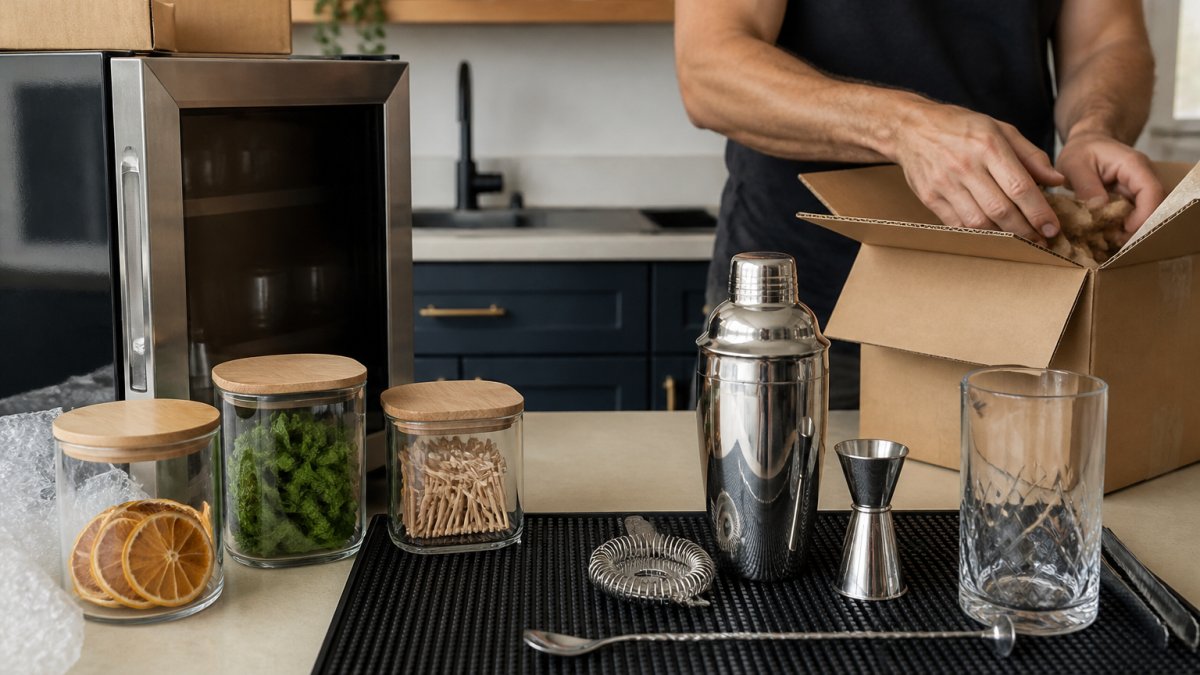
Keep the most-used garnishes closest to you. Mint and citrus wheels should be a hand's reach from where you build drinks. Stackable, labeled containers save space and make restocking fast.
Make-Ahead Prep and Service Workflow for Garnishes
Make-ahead prep works best when you cut, wash, and store in the right order. Wash and dry herbs first, cut citrus second, then store everything cold and labeled until service.
A simple workflow keeps prep calm:
- Shop and sort: Buy fresh produce, then separate what needs washing from what does not.
- Wash and dry: Rinse herbs and berries, then dry them fully. Wet garnishes spoil faster.
- Cut and portion: Cut citrus into wheels and wedges. Portion herbs into service-sized bunches.
- Store cold and label: Seal everything in containers, label by type, and refrigerate.
- Set out at service: Pull only what you need and keep the rest cold.
For parties, batch your cocktails and premade refreshments ahead of time so the garnish is the only thing you touch during service. That keeps your station clean and your garnishes fresh.
If you would rather skip the sourcing entirely, our boxes arrive with premium garnishes and house-made syrups ready to use, plus recipe cards and video tutorials to guide the build. You can review USDA food safety guidance on refrigerated storage to set safe holding habits for cut produce.
Common Garnish Storage Mistakes to Avoid
The biggest garnish mistakes are storage mistakes, not technique mistakes. Sealing wet herbs, stacking citrus, and leaving garnishes at room temperature undo hours of prep.
Watch for these:
- Storing wet: Trapped moisture rots herbs and softens citrus. Dry first, always.
- Stacking citrus: Weight crushes flesh and speeds drying. Use shallow, single layers.
- Leaving garnishes out: Room temperature speeds decline. Hold cold until service.
Reducing garnish waste comes down to cutting what you need and storing the rest well. A little planning beats a fridge full of forgotten containers.
For the finer points of building balanced drinks, the FDA Food Code on time and temperature control is a useful reference for safe holding, and USDA seasonal produce guidance can help you pick garnishes at their peak.
Frequently Asked Questions
Should cocktail garnishes be refrigerated?
Most fresh cocktail garnishes belong in the refrigerator. Cut citrus, berries, fresh herbs, and any fruit slices should be cold held at 40°F or below to slow spoilage and stay within food safety guidance. Dried fruit and dehydrated citrus wheels are the exception and keep well in an airtight container at room temperature. If you plan to set garnishes out for service, keep them in small batches and swap them back into the fridge rather than leaving a full tray on the counter for hours.
How long do fresh cocktail garnishes last?
Cut citrus stored in an airtight container in the refrigerator can last a few days before the edges dry out. Fresh mint and basil can hold for a few days when stems sit in a little water, covered loosely. Berries typically last a couple of days once washed. Dried fruit garnishes keep for weeks in sealed containers. Check for limp leaves, brown edges, or a dull, dried surface, and discard anything that has lost its crisp texture or smells off.
Can you prepare cocktail garnishes in advance?
Yes, and doing so makes hosting far easier. Cut citrus wheels and store them in labeled, stackable containers in the refrigerator up to a day ahead. Wash and dry herbs, then refrigerate them with stems in water. Skewer olives, cherries, or fruit onto cocktail picks and keep them covered and cold. Leave the final assembly, like a fresh mint sprig or a citrus peel twist, until just before serving so the garnish looks crisp and smells bright when the drink reaches your guest.
How do you keep cut citrus from drying out before guests arrive?
Moisture is the whole game with cut citrus. Pack wheels and wedges cut-side down in an airtight container lined with a damp paper towel, then seal and refrigerate. Avoid stacking heavy slices on top of delicate ones. If you are setting out a garnish display, work in small batches and replenish from the refrigerator rather than putting out the full supply at once. A squeeze of the fruit itself tells you fast whether it is still worth using: dry, pithy slices should be replaced.
Fresh garnishes are the detail guests notice, and the detail that makes a home cocktail feel bar-quality. If sourcing and prepping premium garnishes feels like a lot of work, DEVIANT Cocktail Club delivers everything for 12 cocktails in one box, with house-made syrups, premium garnishes, and zero-proof options, all with free shipping. Get started with DEVIANT Cocktail Club and serve drinks that look as good as they taste.