

Quick Summary
Stylish apparel for professional bartenders needs to look sharp and also move with you through eight-hour shifts. Choose fitted, breathable, durable pieces with room through the shoulders, paired with slip-resistant footwear. Neutral base layers with one statement piece work best.
- Check range of motion by reaching overhead and to one side before buying a top.
- Breathable, lightweight fabric keeps you comfortable near the well and the ice bin.
- Dark heavy fabrics look polished but trap heat, so test an outfit on a full shift first.
- Choose slip-resistant footwear with a removable cushioned insole and replace it once tread wears smooth.
- Build a starter kit of two base tops, one statement top, a structural layer and work shoes.
Table of Contents
- What Makes Bartender Apparel Work on a Busy Shift
- Bartender Outfit Ideas That Balance Style and Function
- Shirts, Tees and Tops: Choosing the Right Base Layer
- Bartender Uniform for Women: Fit, Silhouette and Comfort
- Aprons, Vests and Suspenders: Layers That Protect and Polish
- Bartender Work Shoes, Pants and Footwear Safety
- Building Your Shift-Ready Wardrobe at Home
- Frequently Asked Questions
What Makes Bartender Apparel Work on a Busy Shift
Last Updated: November 17, 2026
Stylish apparel for professional bartenders has to do two jobs at once: look sharp from the first order to the last, and hold up through eight-hour shifts of lifting, reaching and standing. The answer is rarely the most fashionable option. It is the outfit that moves with you.
Most bar uniforms fail in the same few ways. The fabric wrinkles by the second hour, the shirt pulls across the shoulders when you reach for a top-shelf bottle, and the pants start to feel heavy by midnight. A good outfit solves those problems before anyone notices them.
Three things separate apparel that works on a busy shift from apparel that just looks good on a hanger:
- Range of motion: Shoulders, elbows and hips should move freely when you shake, stir and reach across the bar.
- Breathability: Bars get warm fast, especially near the well and the ice bin. Lightweight, breathable fabric keeps you comfortable.
- Durability: Repeated washing and abrasion from bar tops, aprons and wet hands wear down cheap fabric quickly.
Watch out: Dark, heavy fabrics look polished under low bar lighting, but they trap heat. If you work a hot, crowded shift, test the outfit during a full shift before you commit to a whole wardrobe.
Bartender Outfit Ideas That Balance Style and Function
Balancing style and function starts with a simple formula: one base layer, one structured layer, and one piece that gives you personality. A fitted black racerback tank under a dark button-up, paired with tailored black pants, covers the basics. It looks intentional and gives you room to move.
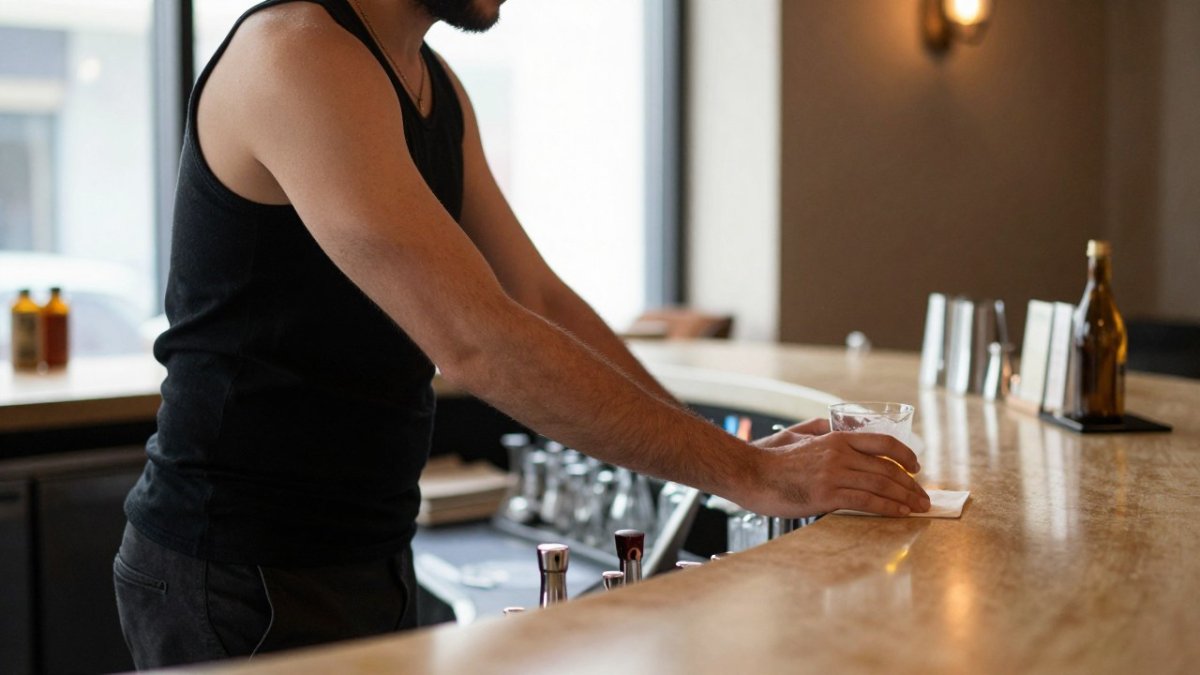
Some working combinations that hold up well:
- Relaxed-modern: A fitted tee with dark trousers and a leather or canvas apron.
- Classic-polished: A collared shirt with sleeves rolled to the forearm, a waistcoat, and chinos.
- Warm-casual: A soft tee in a muted tone with dark jeans and sturdy shoes.
Choose one or two statement pieces, such as a graphic tee or a bold waistcoat, and keep everything else neutral. Your guests remember the look. Your coworkers remember how you moved. To see how technique shapes the drinks you serve, stirring vs shaking cocktails explains the difference.
Shirts, Tees and Tops: Choosing the Right Base Layer
The shirt is the piece you wear longest, so it deserves the most attention. Tees and racerback tanks offer the most freedom of movement and suit warm bars. Collared shirts look more formal and work well in upscale venues, but they need enough room through the shoulders and upper arms to avoid pulling when you reach overhead.
A few options from our own catalogue illustrate the range:
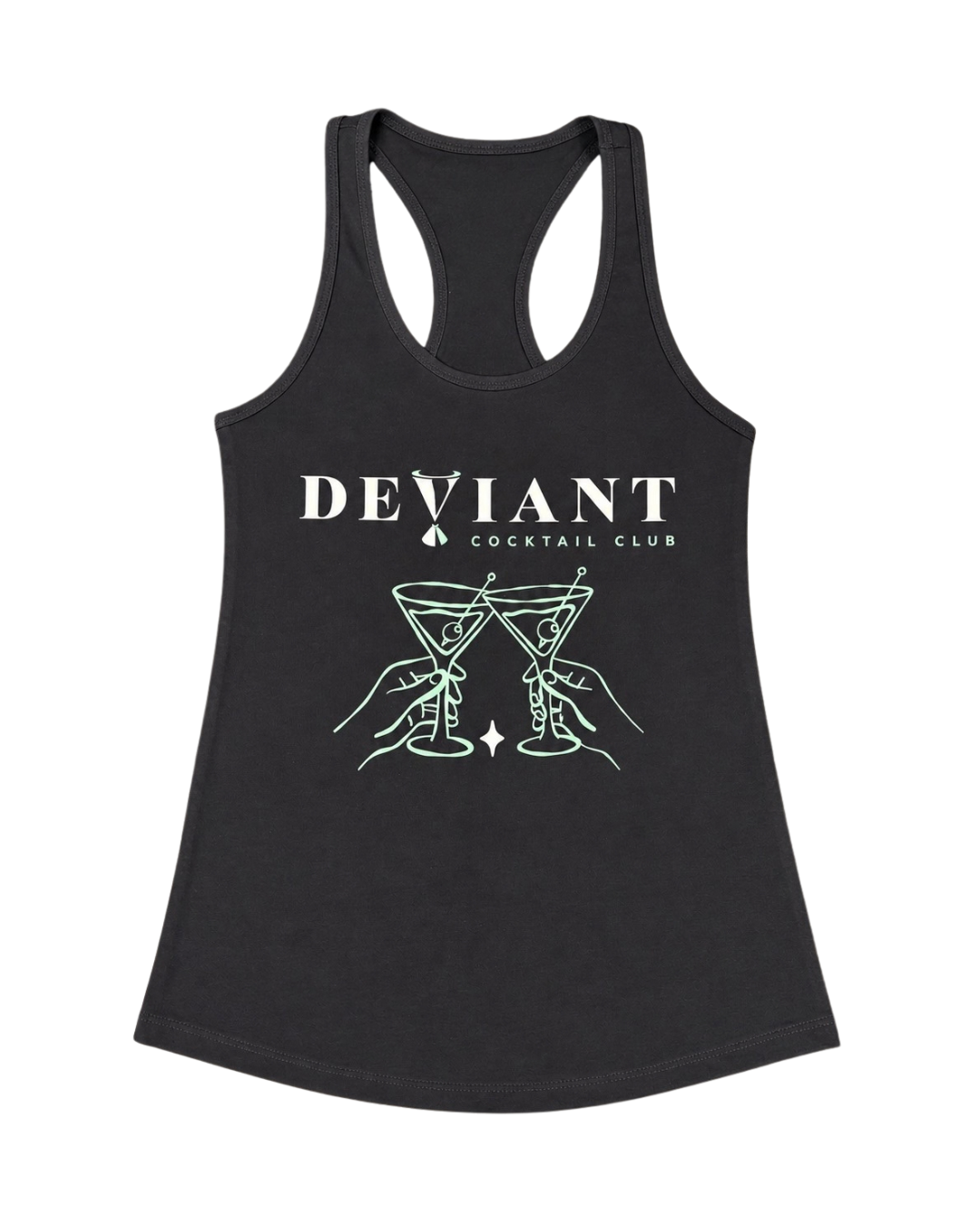
- Deviant Cocktail Club Racerback Tank ($26.00): A black racerback with the Deviant Cocktail Club logo and an illustrated martini-glass graphic, cut to a women's silhouette.
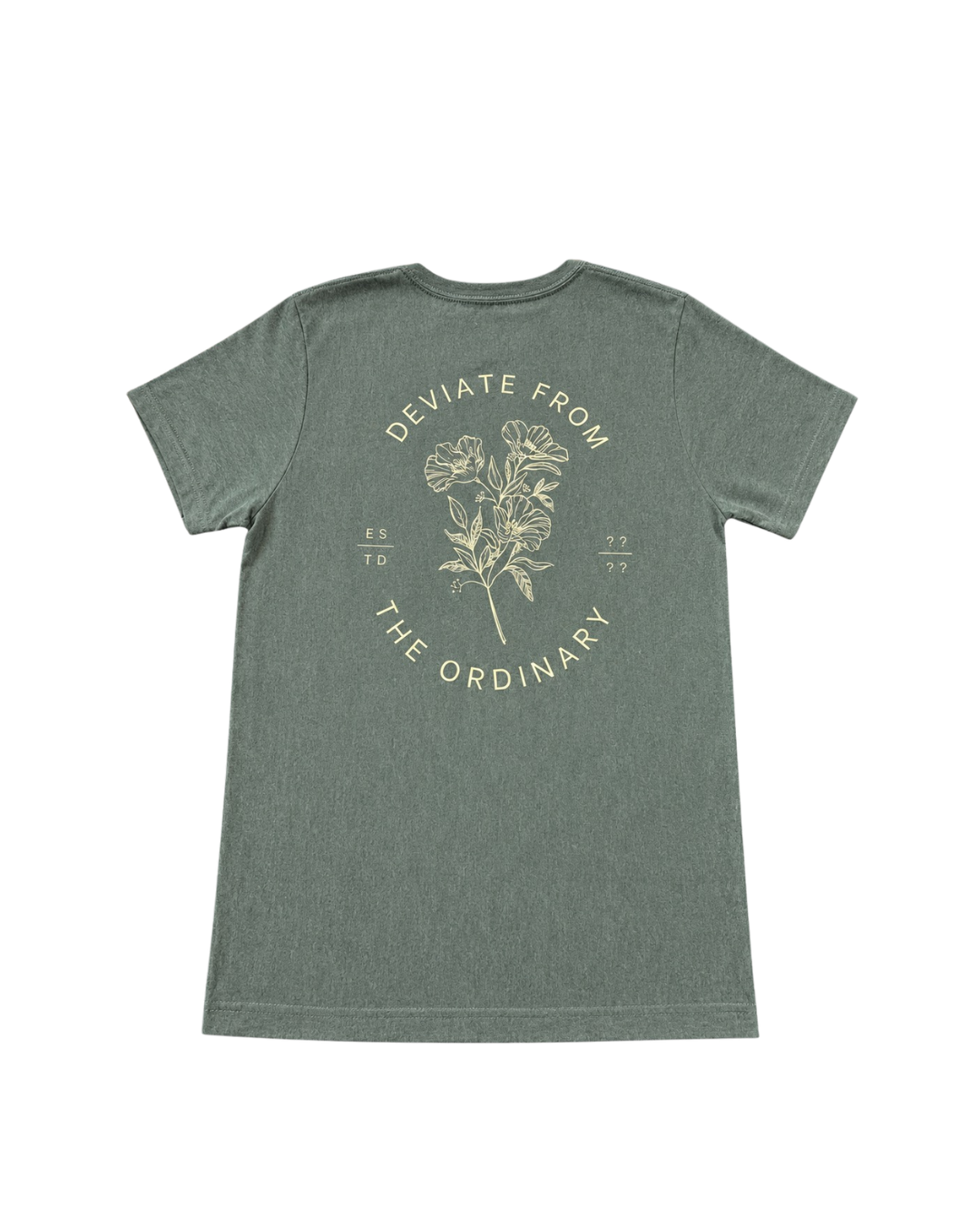
- Botanical Deviant Tee ($32.00): A muted green short-sleeve tee with subtle front branding and a botanical back graphic. It is unisex.
- Deviant for Life Tee ($32.00): Available in cream and black, with a boxed chest logo and a large back graphic.
Best for: Bartenders who want a clean, casual look that still reads as on-brand. Skip if: Your venue requires a collared shirt or a strict uniform.
Fabric matters as much as cut.
Bartender Uniform for Women: Fit, Silhouette and Comfort
Fit is where most women's bar apparel goes wrong. Unisex sizing often leaves too much fabric at the waist and too little room through the chest and shoulders. A fitted silhouette with some stretch gives you a clean line and enough freedom to reach, pour and lift.
When you try on a top, check three things. Raise your arms overhead and reach to one side, as if grabbing a bottle. Make sure the hem stays put and the shoulder seams do not pinch. Then bend slightly at the waist to confirm the fabric does not gape at the front.
The Deviant Cocktail Club Racerback Tank is cut to a women's silhouette. The Raise Your Standards Tee ($32.00) is a black short-sleeve tee with an oversized back graphic.
Aprons, Vests and Suspenders: Layers That Protect and Polish
Aprons protect your clothes from spills, citrus and syrup, and they give you pockets for a bar key, a pen and a folded napkin. Choose a canvas or leather apron with sturdy ties and a pocket placement that does not block your hips when you bend.
Vests and waistcoats add structure and a more polished look without adding much heat. They work especially well over a plain tee or a collared shirt. Suspenders suit a classic, vintage-inspired look, though they can restrict movement if they are too tight.
A common mistake is layering too much. One structural layer, either an apron or a vest, is usually enough. Two bulky layers at once make it harder to reach the well and slow down service.
Bartender Work Shoes, Pants and Footwear Safety
Feet take the most punishment on a bartending shift. Most bartenders stand for the entire night, often on hard floors, and the wrong shoe turns a good outfit into a countdown to the end of the shift. Footwear is also the piece most guides gloss over, so treat it as the foundation of the wardrobe rather than an afterthought.
Start with the sole. Slip resistance is the single most important feature, because wet floors, spilled syrup, dropped ice and broken glass are routine on busy nights. Look for shoes marketed as slip-resistant and check the outsole pattern: a shallow, smooth sole is a hazard on a wet mat, while a lugged or channeled rubber outsole sheds liquid and grips. Many venues post a footwear policy, and some specify non-slip or closed-toe styles, so confirm the requirement before you buy.
Support matters as much as grip. A removable, cushioned insole lets you replace the cushioning without replacing the shoe, and a firm heel counter keeps the foot from sliding. If you stand for eight hours, a second pair rotated midweek lets each pair dry out and recover, which extends the life of both.
Pants should be durable and stretch slightly. Chinos, tailored trousers and dark jeans with some give all work well. Avoid loose, wide-leg styles that catch on bar stools or trail through wet spots near the sink. A straight or tapered leg that breaks just above the shoe keeps the hem out of spills and reads as intentional rather than sloppy.
Watch out: A shoe that feels comfortable in the store can turn painful by hour six. Break in new work shoes on a shorter shift before trusting them on a busy night, and replace them once the outsole loses its tread pattern, worn tread is where slips happen.
Building Your Shift-Ready Wardrobe at Home
A practical wardrobe starts small. Pick two base tops, two bottoms and one structural layer, and make sure they all work together. Then add a statement piece once the basics are in rotation. The goal is a capsule that covers a week of shifts without a daily decision, and that means choosing pieces for fit, fabric and value rather than filling the closet.
Our suggested starting kit:
| Piece | Purpose | Example from our catalogue |
|---|---|---|
| Fitted base top | Freedom of movement, everyday wear | Deviant Cocktail Club Racerback Tank ($26.00) |
| Second base top | Rotation and comfort | Botanical Deviant Tee ($32.00) |
| Statement top | Personality on off-nights | Escape the Ordinary Tee ($32.00) |
| Structural layer | Polish and pocket space | Canvas or leather apron |
| Work shoes | Support and slip resistance | Closed-toe, slip-resistant |
Fit is where a capsule succeeds or fails, and it is where generic sizing advice lets bartenders down. Unisex cuts often leave too much fabric at the waist and too little room through the chest and shoulders, so try on tops with a reach test: raise your arms overhead and reach to one side as if grabbing a bottle, then bend at the waist to confirm the fabric does not gape.
Rotating base tops helps keep any single piece from wearing out early.
Dress-code coordination is the last piece. Match the capsule to your venue's branding and uniform policy before adding personality: a strict venue may require a collared shirt and specific colors, while a relaxed bar leaves room for a statement tee or a bold waistcoat. Keep one or two statement pieces and everything else neutral so the outfit reads as on-brand rather than off-policy. If you want to go deeper on the cocktails you will be serving in that outfit, our guide on how to make craft cocktails at home walks through technique step by step. For anyone building a home bar alongside a shift wardrobe, our article on how to choose a crystal cocktail shaker set covers what to look for in shaker quality.
Keep the rest of your decisions simple. Replace shoes once the sole loses its grip, retire a top when the seams or print fail, and add pieces only when they fill a real gap in the rotation. A shift-ready wardrobe is less about buying more and more about buying pieces that work hard and look good doing it.
Frequently Asked Questions
What do professional bartenders wear?
Most professional bartenders wear a clean, fitted top such as a collared shirt, polo or well-fitted tee, paired with dark pants or chinos and closed-toe shoes with non-slip soles. A bib or waist apron adds pockets for tools and a tidy, cohesive look. Choose breathable fabrics that hold their shape through long shifts, and pick colors that hide spills and match the venue's dress code. The Deviant Cocktail Club Racerback Tank is priced at $26.00 and the Botanical Deviant Tee at $32.00.
What are some good outfits for bartenders?
Good bartender outfits combine a comfortable top, practical bottoms and an apron or vest. A black fitted tee with dark trousers and a black apron suits a modern cocktail bar, while a button-up shirt with a waistcoat fits a more formal setting. For warmer shifts, lightweight tops and breathable fabrics help you stay comfortable. Use the bartender outfit ideas above as a starting point, then adjust for your venue's dress code and the amount of movement your shift requires.
Can bartenders wear jeans?
Many bartenders can wear jeans, but it depends on the venue. Dark, well-fitted jeans without rips or heavy fading usually pass at casual bars, while upscale cocktail lounges often prefer chinos or trousers. Choose a stretch fabric that allows bending and reaching behind the bar. Pair jeans with a clean top and a bar apron so the outfit still looks intentional and professional.
What shoes are best for bartenders?
The best bartender work shoes are closed-toe, supportive and slip-resistant, since you will spend hours standing and walking on hard floors that can get wet. Look for cushioned insoles and a secure fit that will not slip off during quick movements. Keep a dark, low-profile pair that matches your uniform, and replace them when the soles lose traction or the cushioning flattens out.
