

Last Updated: October 28, 2026
Quick Summary
The best non-alcoholic spirits for mocktails are chosen by matching the replacement to the drink's job: botanical zero-proof gins for spritzes, oak-and-vanilla styles for stirred drinks, and bitter aperitif-style bases for lighter serves. Taste each bottle neat before mixing, then judge flavor, ABV labeling, and cost per serving.
- Choose a zero-proof spirit first, because mixers add sweetness or fizz but not body.
- Match the spirit category to the recipe, such as gin alternatives for spritzes and whiskey alternatives for stirred drinks.
- Taste 0.5 oz neat with a few drops of water to judge the spirit's real character.
- Look for an explicit 0.0% ABV statement, since "non-alcoholic" can still contain trace alcohol.
- Divide the bottle price by about 15 pours per 700 ml bottle to compare cost per serving.
Table of Contents
- What Non-Alcoholic Spirits Are and How They Differ From Mocktail Mixers
- The Spirit Categories You Can Replace: Gin, Whiskey, Rum, Tequila and Aperitifs
- Easy Mocktail Recipes for Beginners Built Around a Zero-Proof Base
- How to Make Mocktails Taste Like Cocktails: Balance, Bitterness and Texture
- Best Non-Alcoholic Whiskey Alternatives and Which Mocktails They Suit
- A Side-by-Side Scoring System: Flavor, ABV, Ingredients, Price per Serving
- Ready to Mix Your First Zero-Proof Cocktail Box With DEVIANT Cocktail Club
- Frequently Asked Questions
Walk into a liquor store on a Friday night and you'll find a wall of spirits built for cocktails. For drinkers who've cut back, pregnant guests, designated drivers, and anyone who simply wants a sophisticated glass without the alcohol, that wall offers little. DEVIANT Cocktail Club offers a monthly zero-proof box for people looking for a sophisticated drink without alcohol. Here is how to evaluate them, what to watch for, and where a box fits.
What Non-Alcoholic Spirits Are and How They Differ From Mocktail Mixers
Non-alcoholic spirits are distilled or botanically infused liquids designed to mimic the flavor profile of gin, whiskey, rum, or tequila without the ethanol. They sit in a different category from mocktail mixers such as tonic, sodas, or bitters-and-syrup combinations. A mixer adds sweetness or fizz. A spirit supplies the body, botanical depth, and finish that make a drink taste like a cocktail rather than a soft drink.
Adding lime and soda to a glass gives you refreshment, not complexity. Choosing a zero-proof base first gives the drink structure.
The Spirit Categories You Can Replace: Gin, Whiskey, Rum, Tequila and Aperitifs
Each spirit category has a different job in a drink, so the replacement should match that job.
- Gin alternatives lean on juniper, citrus peel, and herbal botanicals. They work well in gimlets, spritzes, and tonic-based drinks.
- Whiskey alternatives need oak-driven warmth, vanilla, and a dry finish. They suit stirred, spirit-forward drinks.
- Rum alternatives carry caramel and tropical notes, which pair well with citrus and fresh juice.
- Tequila alternatives bring agave sweetness and sometimes a smoky edge, useful in margarita-style builds.
- Aperitif alternatives offer bitterness and low sweetness, and they suit lighter, pre-dinner serves.
Match the category to the recipe before you buy. A bitter aperitif substitute will ruin a drink that needs sweet, round body.
Easy Mocktail Recipes for Beginners Built Around a Zero-Proof Base
Start with recipes that use a single zero-proof base and two or three ingredients. Fewer components make it easier to judge the spirit itself.
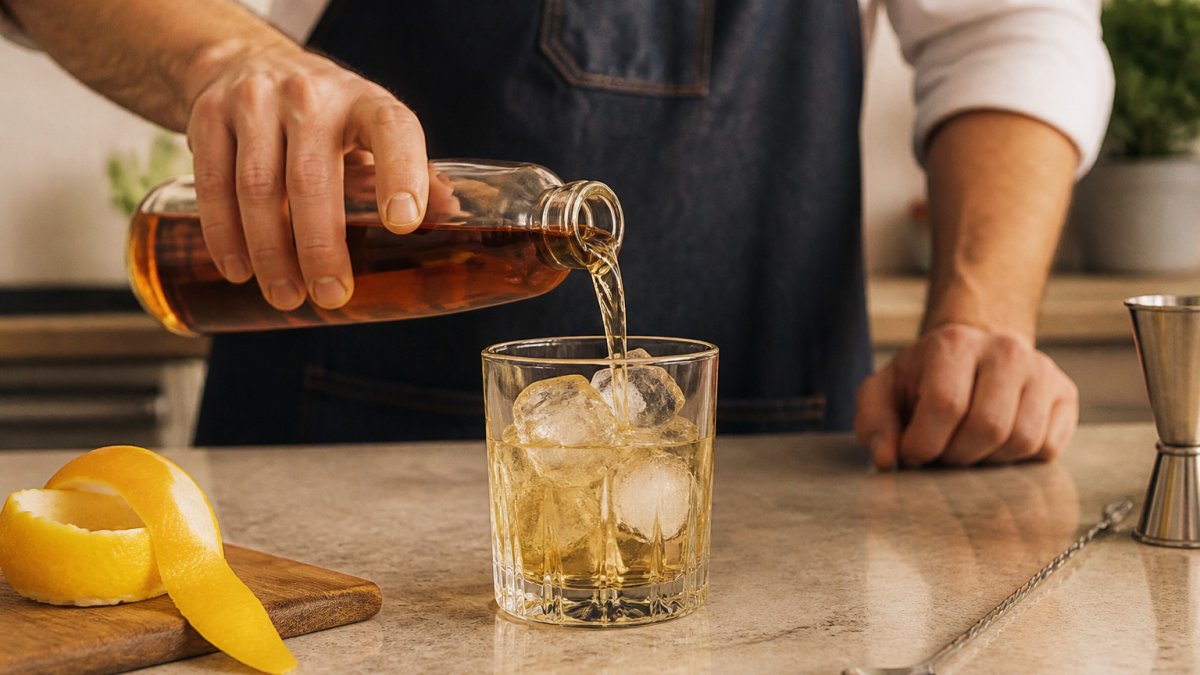
A basic zero-proof spritz works like this: 1.5 ounces of a botanical zero-proof spirit, 3 ounces of tonic water, a squeeze of fresh grapefruit, and ice in a wine glass. Garnish with a grapefruit twist. The spirit's botanicals should be clearly present once the tonic is added. If they disappear, the base is too light for the drink.
For beginners, the most useful rule is to taste the spirit neat, or with a few drops of water, before mixing. That baseline shows you its real character, which the mixers will then amplify or hide.
How to Make Mocktails Taste Like Cocktails: Balance, Bitterness and Texture
Mocktails often fail because they miss three elements that cocktails get from alcohol: body, bitterness, and mouthfeel. Here is how to address each.
Balance. Alcohol adds a warming sweetness and heat. Replace that with a measured sweetener, such as a house-made syrup, and taste as you go.
Bitterness. A few dashes of aromatic bitters or a small amount of an aperitif-style base add the structure that makes an adult palate respond. Without it, drinks taste flat.
Texture. Add a small amount of citrus juice or a splash of a viscous syrup to give the drink weight. Shaking with ice and straining also improves the mouthfeel.
A common mistake is overcorrecting for sweetness, which turns a sophisticated drink into dessert. Add the sweetener last, in small increments.
Best Non-Alcoholic Whiskey Alternatives and Which Mocktails They Suit
Caramel-and-spice style. Softer, sweeter, and more approachable, these suit beginners and work in a zero-proof hot toddy or a spiced cider highball. They are the weakest choice for a spirit-forward drink because the sweetness has nothing to balance against.
Pairing whiskey alternatives to specific mocktails
| Mocktail | Whiskey style to use | Build notes |
|---|---|---|
| Zero-proof old fashioned | Oak-and-vanilla | 2 oz spirit, 1 bar spoon demerara syrup, 2 dashes aromatic bitters, big rock |
| Zero-proof whiskey sour | Oak-and-vanilla | 2 oz spirit, 0.75 oz lemon, 0.5 oz simple syrup, dry shake then wet shake |
| Smoked highball | Smoky | 1.5 oz spirit, 4 oz ginger beer, lemon wedge, plenty of ice |
| Hot toddy | Caramel-and-spice | 2 oz spirit, 0.5 oz honey syrup, 0.5 oz lemon, hot water |
What to check before you buy a bottle
If the label only says "non-alcoholic," check the fine print for an ABV figure.
A practical test: pour 0.5 oz neat, add a few drops of water, and taste. If the oak and vanilla read clearly at that strength, the bottle will hold up in a stirred drink. If it tastes thin or sugary, save it for highballs and toddies.
A Side-by-Side Scoring System: Flavor, ABV, Ingredients, Price per Serving
| Criterion | What to check | How to score |
|---|---|---|
| Aroma | Does it smell like the category it imitates? | 5 = unmistakable; 1 = no category character |
| Taste | Is the flavor balanced or sugary? | 5 = dry, layered; 1 = one-note sweet |
| Finish | Does it linger cleanly or drop off? | 5 = long, clean; 1 = flat or bitter |
| Mixer compatibility | Does it survive tonic, citrus, and soda? | 5 = holds up; 1 = disappears |
| ABV and labeling | Is 0.0% stated clearly? | 5 = explicit 0.0%; 1 = vague |
| Cost per serving | Shelf price divided by pours per bottle | 5 = under $2; 1 = over $5 |
Worked example: cost per serving
A 700 ml bottle yields about 15 pours at 1.5 oz each. If the bottle costs $35.00, the cost per mocktail is roughly $2.33 before mixers. A $50.00 bottle at the same size works out to about $3.33 per pour. Compare that with a conventional spirit pour and with a ready-to-drink zero-proof cocktail, which often runs $4.00-$6.00 per can. The bottle usually wins on value once you use it more than a few times, which is why serving count matters more than shelf price.
Ingredient, nutrition, and allergen transparency
Check the nutrition panel for sugar and calories per 1.5 oz serving. A bottle with 8-10 g of sugar per pour will taste sweet in a stirred drink, so note it before you buy. Look for the sweetener used (cane sugar, monk fruit, stevia, or glycerin) because each reads differently in a finished mocktail. Scan the ingredient list for grain bases, tree nuts, or botanicals you avoid, and treat the front label as marketing rather than fact.
Alcohol-content and labeling clarity
"Zero-proof" and "alcohol-free" are not interchangeable on a label. A 0.0% statement is the clearest signal. A bottle labeled "non-alcoholic" may still contain trace alcohol under 0.5% ABV, which matters for pregnancy, medication interactions, and recovery. Check the fine print for an ABV figure and note it in your scoring sheet.
Buying guidance by need
- Flavor-first: score aroma and taste highest and accept a higher cost per pour.
Ready to Mix Your First Zero-Proof Cocktail Box With DEVIANT Cocktail Club
DEVIANT Cocktail Club's THE ALIBI | Zero-Proof box includes a zero-proof spirit and ingredients for making craft cocktails. Each box includes a full-size 0.0% ABV zero-proof spirit, house-made syrups, premium bitters, garnishes, and recipe cards with guided video tutorials for 12 cocktails. Shipping is included, and the cost is $119.00 per box. You'll need only ice.
The order cutoff is the 24th of each month at 10 PM local time, and boxes ship by the 5th of the following month. The Gift version is also available. For a broader set of drink ideas after the beginner recipes, explore our non alcoholic craft cocktail recipes, and to see how to host with these drinks, read how to host a zero-proof cocktail night.
Frequently Asked Questions
What are the best non-alcoholic spirits that actually taste like alcohol?
The spirits that come closest to the real thing are the ones with a clear botanical identity and some bitterness or spice in the finish, since those are the cues that make a drink taste like gin or whiskey. Look for labels that list botanicals or a flavor profile rather than just citrus and sweetness. Taste them neat first, then in a simple stirred drink, because a spirit that reads well neat can fall apart once diluted. DEVIANT Cocktail Club's THE ALIBI box includes a full-size zero-proof spirit.
How do you use non-alcoholic spirits in mocktails?
Treat the zero-proof spirit as the backbone of the drink and build around it the way you would with alcohol. Use the same measures a classic recipe calls for, add a sour element such as citrus juice, a sweet element such as syrup, and something bitter or aromatic to add depth. Then dilute with ice in a shaker or mixing glass. Tonic water or seltzer can finish a highball-style drink. Mocktails built this way usually taste fuller than ones made with juice and soda alone.
Are non-alcoholic spirits worth the price?
They can be, depending on how often you mix drinks and what you would otherwise buy. Compare the cost per serving with the bottle price. Also factor in the ingredients you would otherwise need to buy separately, such as syrups and bitters. DEVIANT Cocktail Club's THE ALIBI box is $119.00 and includes a full-size zero-proof spirit along with syrups, bitters, garnishes and recipe cards for 12 cocktails, so the per-drink cost depends on how many of those cocktails you make.
What is the best non-alcoholic substitute for gin or whiskey?
For gin, look for a zero-proof spirit with juniper or other botanicals and a dry, herbal finish, since that is what a gin-based drink relies on. For whiskey, look for warm, oaky, or spiced notes and some sweetness, which will work well in stirred drinks and sours. Match the spirit to the drink: a dry botanical base suits a gin-style highball, while a spiced base fits a whiskey sour. Taste the spirit on its own before committing it to a recipe, because the intended substitute may need adjusting with more sweetener or bitters.
