

Last Updated: November 14, 2026
Quick Summary
The best cocktail shaker for home garnish prep is a Boston shaker, because its wide open top and separate Hawthorne and fine-mesh strainers give you control over pulp, herbs, and ice. A cobbler shaker is easier for beginners, but its built-in strainer clogs with mint and citrus pulp.
- A Boston shaker is a two-piece metal tin and tumbler with no built-in strainer.
- A cobbler shaker is a three-piece unit with a built-in strainer and small cap.
- A 17 oz shaker handles a single drink comfortably; larger sizes invite overfilling.
- A fine-mesh strainer is the most important add-on for garnish-heavy drinks.
- Cut citrus twists and prep garnishes before you build the first drink.
Table of Contents
- Why Garnish Prep Changes Which Cocktail Shaker You Should Buy
- Shaker Comparison: Capacity, Seal, and Grip at a Glance
- The Best Cocktail Shaker for Beginners Learning Garnish Cuts
- Choosing the Best Boston Cocktail Shaker for Citrus and Herb Drinks
- Boston vs. Cobbler Cocktail Shaker: Which Handles Garnish-Heavy Recipes
- Cocktail Garnish Prep Tools That Pair With Your Shaker
- Build Your Garnish-Ready Bar Setup With DEVIANT Cocktail Club
- Frequently Asked Questions
Why Garnish Prep Changes Which Cocktail Shaker You Should Buy
The best cocktail shaker for home garnish prep is the one you can open with wet, sticky hands while a citrus twist waits on the cutting board.
The core tension: a shaker that seals hard protects against spills, but one that seals too hard fights you every time you strain.
The three shaker styles below cover nearly every home bar decision.
The Three Shaker Styles That Matter for Garnish Work
A Boston shaker is a two-piece shaker made of a metal tin and a glass or metal tumbler that seal with a firm tap.
A cobbler shaker is a three-piece shaker with a built-in strainer and a small cap.
A French shaker is a two-piece shaker with a metal body and a metal cap, no strainer.
For garnish-heavy drinks, the Boston usually wins. The cobbler is easier to start with but demands more cleanup attention.
Shaker Comparison: Capacity, Seal, and Grip at a Glance
Capacity, seal type, and grip decide how a shaker performs once garnishes enter the picture. A 17 oz shaker handles a single drink comfortably; anything larger invites overfilling and spills.
| Shaker Style | Typical Capacity | Seal Type | Grip | Best For |
|---|---|---|---|---|
| Boston (two-piece) | 18-28 oz | Friction tap seal | Metal tin, easy grip | Citrus, herbs, high-volume hosting |
| Cobbler (three-piece) | 12-20 oz | Screw or push cap | Slim body, can slip | Beginners, single drinks |
| French (two-piece) | 12-18 oz | Push cap seal | Metal body, sleek | Simple sours, small batches |
Typical Capacity
For a deeper walkthrough of specs and materials, see our guide on how to choose a crystal cocktail shaker set.
The Best Cocktail Shaker for Beginners Learning Garnish Cuts
The best cocktail shaker for beginners is a cobbler shaker: one unit, a built-in strainer, and no separate tools to buy.
Beginners tend to make the same mistakes:
- Overfilling the tin, which prevents a proper seal and causes spills
- Skipping the ice dump, which dilutes the drink
- Shaking herbs too hard, which releases bitter chlorophyll
- Cutting garnishes too early, so citrus twists dry out before serving
A cobbler shaker forgives most of these. The built-in strainer catches large debris, and the cap keeps the shake contained.
If you want a curated starting point, our roundup of the best cocktail shaker sets for beginners compares options side by side before you commit.
Choosing the Best Boston Cocktail Shaker for Citrus and Herb Drinks
The best Boston cocktail shaker for citrus and herb work has weighted tins and a clean friction seal.
The Boston suits garnish-heavy recipes because its wide open top lets you dump ice and pulp in one motion.
Watch out: a Boston shaker with a glass tumbler can crack if you tap the seal too hard or run it under cold water while it is warm.
If you are building citrus and herb drinks, our technique guide on why double strain cocktails explains how a second pass through a fine-mesh strainer keeps pulp and mint out of the glass.
Boston vs. Cobbler Cocktail Shaker: Which Handles Garnish-Heavy Recipes
The Boston shaker handles garnish-heavy recipes better because its open top and separate strainer give you control over pulp, herbs, and ice. The cobbler is easier to use but clogs when you muddle mint or shake citrus with pulp. The longer answer is about capacity math, strainer geometry, and seal release under sticky hands.
Capacity Math for Garnish-Heavy Drinks
A standard single drink is roughly 3 to 4 oz of liquid before ice; add ice and you are at 8 to 10 oz inside the tin. Muddled mint, citrus wedges, or berries can push a garnish-heavy drink to 12 to 14 oz before you even seal it. A 12 oz cobbler is at its limit; a 16 to 18 oz cobbler has headroom; an 18 to 28 oz Boston handles it comfortably.
Strainer Geometry: Why the Cobbler Clogs
A cobbler's built-in strainer has a fixed pattern of small holes. Mint fragments, citrus pulp, and berry seeds bridge across those holes and block flow, forcing you to shake the shaker to get the drink out and sending debris into the glass. A Boston shaker with a Hawthorne strainer uses a spring coil that holds back ice and large solids while letting liquid flow around it; a second pass through a fine-mesh strainer catches the fine pulp and herb bits.
Seal Release With Wet, Sticky Hands
A Boston shaker seals with a friction tap and releases with a firm tap on the side of the tin, a single motion that does not depend on grip strength, which matters when your hands are wet or sticky. A cobbler's cap is screwed or pushed on; a screw cap can seize when sugar syrup dries in the threads, and a push cap can stick after a hard shake.
A Simple Side-by-Side Test You Can Run at Home
You do not need a lab to compare the two. Pick one herb-heavy drink and one citrus-heavy drink and run both through each shaker:
- Leak test: seal the shaker, shake hard for 10 seconds, and check the seam for drips. Repeat with a wet hand on the tin.
- Release test: time how long it takes to open the shaker after shaking. A Boston should open in one tap; a cobbler should open without tools.
- Strain test: strain a mint- or muddled-berry drink through each shaker's standard setup and note how much debris reaches the glass.
- Chill test: measure the drink temperature immediately after straining. Both styles should chill a drink to roughly the same range; the difference is in how fast they get there and how cold the tin feels in the hand.
- Cleanup test: rinse each shaker and note how much pulp or mint clings to the strainer and the seams.
Run the same two drinks through both shakers and the pattern usually becomes obvious within one session. Most home bars eventually own both: the cobbler for a single nightly drink, the Boston for hosting and for anything with herbs or muddled fruit.
Watch out: a Boston shaker with a glass tumbler can crack if you tap the seal too hard or run it under cold water while it is warm.
For hosting, the Boston scales better. For a single nightly drink, the cobbler's convenience is hard to beat.
Cocktail Garnish Prep Tools That Pair With Your Shaker
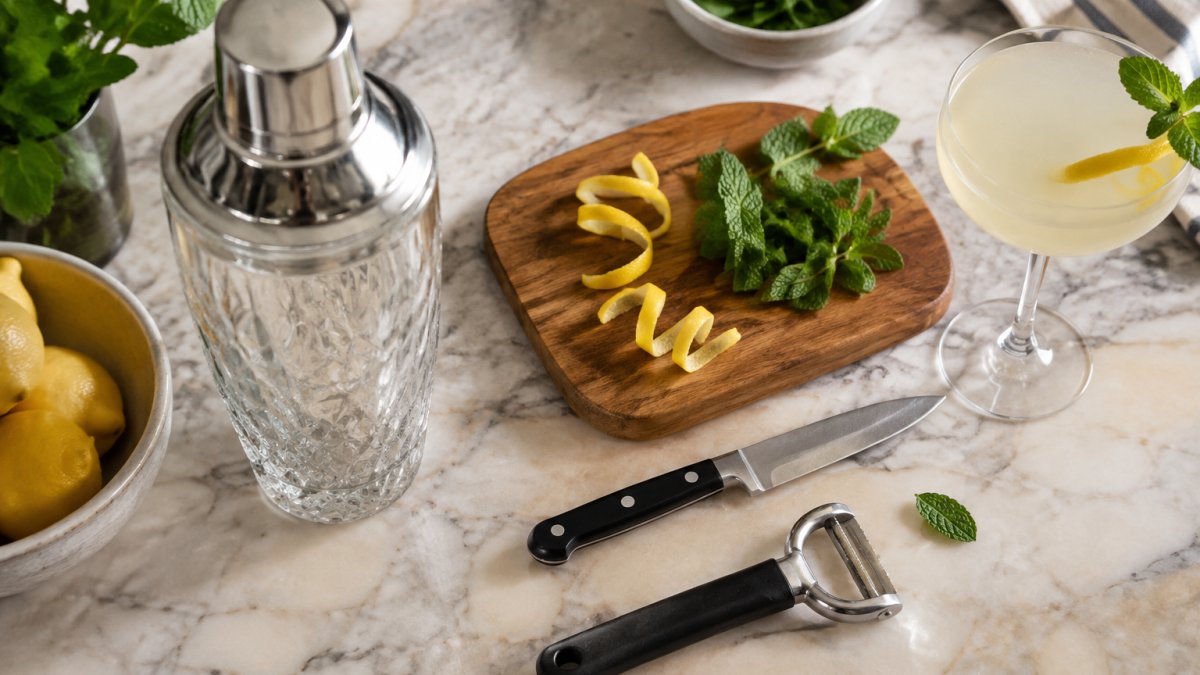
A shaker is only half the garnish workflow. The other half is a small, deliberate tool kit that lets you cut, store, and add garnishes without breaking the rhythm of shaking and straining.
What Actually Ships With a Shaker Set
Cobbler shakers almost always include the built-in strainer and cap, so most beginners only need to add a fine-mesh strainer for a second pass. Boston sets vary widely: some ship as a bare two-tin set, some include a Hawthorne strainer, and a few bundle a jigger and bar spoon. French shakers typically ship bare. A set with a Hawthorne but no fine-mesh strainer still leaves you buying the tool that matters most for herb-heavy drinks.
The Core Garnish Kit, and What Each Tool Actually Does
- Y-peeler: pulls a wide strip of citrus zest in one motion, leaving the bitter white pith behind. It is the fastest way to cut a twist, and it works on lemons, limes, oranges, and grapefruit.
- Channel knife: cuts a narrow groove for decorative ribbons and long, thin twists. It is slower than a Y-peeler and easy to snap if you press too hard, so treat it as a garnish-detail tool rather than a workhorse.
- Fine-mesh strainer: the single most important add-on for garnish-heavy drinks. It catches mint fragments, citrus pulp, and muddled herb bits that a Hawthorne strainer lets through. A fine-mesh strainer that fits inside your shaker tin is easier to manage than one that only rests on top of the glass.
- Hawthorne strainer: the standard spring-coil strainer for a Boston shaker. The spring holds back ice and large solids; it does not catch fine pulp, which is why the fine-mesh pass exists.
- Small cutting board: a board roughly the size of a dinner plate keeps citrus wheels, herb sprigs, and picks contained and lets you move the whole garnish station next to the shaker.
The Workflow: Prep Before You Shake
The order of operations matters more than the tool list. Cut citrus twists and wheels first, then pick and rinse herbs, then set out picks and brined garnishes, before you build the first drink, because citrus oils evaporate quickly once the peel is cut and mint bruises after it is trimmed.
Watch out: cutting garnishes too early is the most common garnish failure. A citrus twist cut an hour before serving loses most of the oils that make it worth adding, and a mint sprig left uncovered will wilt before the second round.
Matching Tools to Your Shaker Style
A Boston shaker user needs a Hawthorne strainer and a fine-mesh strainer, because the shaker has no built-in strainer. A cobbler user already has a built-in strainer but should still own a fine-mesh strainer for herb drinks, since the cobbler's strainer clogs with mint and pulp.
Once prepped, our guide on how to store craft cocktail garnishes keeps them fresh through a full evening of hosting.
Build Your Garnish-Ready Bar Setup With DEVIANT Cocktail Club
A garnish-ready bar comes down to three things: a shaker that seals and releases cleanly, the right prep tools, and ingredients worth garnishing. DEVIANT Cocktail Club covers the third part with monthly boxes built for home entertaining.
Each box ships free and includes everything needed for 12 unique cocktails, with original recipes, house-made syrups, premium garnishes, and hard-to-find ingredients.
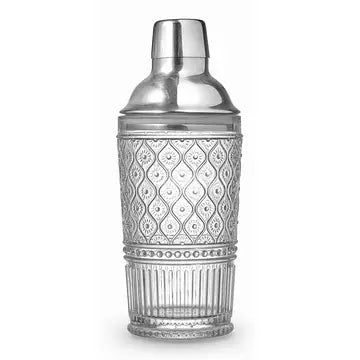
If you want a shaker to anchor the setup, the Claro Clear Crystal Cocktail Shaker is a 17 oz piece with a polished stainless-steel lid and vintage-inspired embossed detailing.
The challenge is simple: pick your shaker, prep your garnishes, and stop settling for flat drinks. Get started with DEVIANT Cocktail Club and shake bar-quality cocktails at home.
Frequently Asked Questions
What is the best cocktail shaker for a home bar?
It depends on how much garnish work you do. A cobbler shaker with a built-in strainer is easier to pour but harder to clean when pulp and leaves get stuck. For a home bar that serves both stirred and shaken drinks, a Boston tin paired with a separate strainer covers the most ground. The Claro Clear Crystal Cocktail Shaker is priced at $27.00.
Is a Boston shaker better than a cobbler shaker for home use?
For garnish-heavy drinks, yes. The trade-off is that a Boston shaker needs a separate strainer and a bit more practice to seal and separate cleanly, so beginners may prefer starting with a cobbler.
Which cocktail shaker is easiest for beginners to use?
A cobbler shaker is the most forgiving entry point. The three pieces fit together in an obvious order, the built-in strainer means you do not need extra barware, and the cap pops off without the tap-and-twist technique a Boston shaker requires. Once you are comfortable with sealing and separating tins, move to a Boston shaker for better control over garnish-heavy recipes. The Claro Blue Cocktail Shaker is a 17 oz shaker priced at $28.50.
Do you need a separate strainer with a Boston shaker?
Yes. A Boston shaker is two pieces, so there is no built-in strainer. You will need a Hawthorne strainer for most cocktails and a fine-mesh strainer if you want to catch small ice shards or herb fragments. That extra step is why Boston shakers suit garnish-heavy drinks: you control exactly how much pulp, mint, or citrus reaches the glass.
