

Last Updated: November 4, 2026
Quick Summary
Learn professional mixology techniques at home by mastering the four preparation methods, shaking, stirring, muddling, and blending, then controlling dilution, ice, and time with a jigger for repeatable drinks. Practice one sour and one stirred drink three times each, changing only one variable per round.
- Six essential tools cover home mixing: shaker, mixing glass, bar spoon, jigger, strainer, and citrus press.
- Shake drinks with citrus, egg, dairy, or syrup; stir drinks made entirely of spirits like a martini.
- Make simple syrup with equal parts sugar and water by weight, warmed until dissolved and cooled.
- A classic sour leans on roughly two parts spirit, one part citrus, and one part syrup.
- Follow a four-week plan moving from shake and stir control to balance and garnish.
Table of Contents
- Building a Foundation in Cocktail Theory and Terminology
- Essential Bar Tools for Home Mixology
- Mastering Shaking, Stirring, and Dilution
- How to Make Syrups for Cocktails and Muddling Basics
- Cocktail Balancing Techniques for Flavor and Aroma
- A Structured Practice Plan with Measurable Milestones
- Service Workflow, Sanitation, and Responsible Alcohol Service
- Choosing Your First DEVIANT Cocktail Club Box
- Frequently Asked Questions
Building a Foundation in Cocktail Theory and Terminology
Professional mixology techniques start with understanding why a drink works, not just following a recipe. Home bartenders who grasp the underlying principles tend to progress well beyond those who only memorize steps.
The core vocabulary matters. A base spirit carries the drink, whether whiskey, gin, rum, or tequila. A modifier adjusts it, such as vermouth, citrus, or liqueur. An accent adds a finishing touch: bitters, a rinse, a garnish oil.
The Four Fundamental Preparation Methods
Four methods cover nearly every drink you'll make. Shaking chills and aerates. Stirring chills and integrates without aeration. Muddling presses fresh ingredients to release flavor. Blending produces texture with crushed ice.
Learn these four before anything else. A bartender who can shake, stir, muddle, and blend with control can execute most of the cocktail canon. The craft cocktail method overview from the Smithsonian traces how these techniques shaped modern drinking.
A common mistake is treating shaking and stirring as interchangeable. They are not, and we'll get to why shortly.
Essential Bar Tools for Home Mixology
The essential bar tools for home mixology are a shaker, a mixing glass, a bar spoon, a jigger, a strainer, and a citrus press.
Here's what actually earns its place:
- Cocktail shaker for anything with citrus, dairy, or egg
- Mixing glass for spirit-forward drinks you stir
- Bar spoon for stirring and measuring small pours
Our bar tools collection covers the pieces we actually reach for. If you're building on a tight budget, our guide to budget home bar essentials shows where to save and where to spend.
Watch out: skipping the jigger is the fastest way to inconsistent drinks. Eyeballing "a splash" makes a recipe impossible to repeat or improve.
Mastering Shaking, Stirring, and Dilution
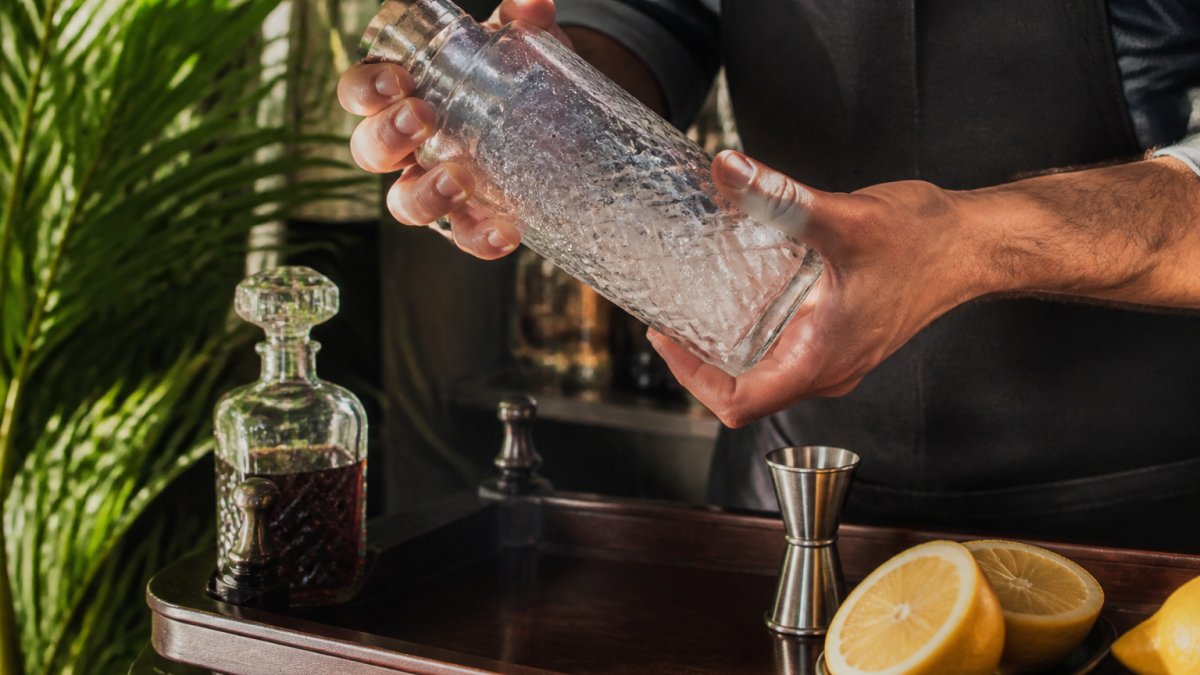
Shaking chills a drink fast and adds texture through aeration and ice shards. Stirring chills gently and keeps a drink silky and clear. Both rely on dilution, the meltwater that softens strong spirits into something balanced. Dilution is not a flaw.
What separates a home bartender from a professional is not knowing that dilution matters, it's controlling it.
The Variables That Actually Change the Drink
- Shake time. Shake a standard sour until the tin is cold and frosted. Shaking longer adds dilution and texture; shaking shorter keeps the drink stronger and sharper. Pick a time, hold it constant, and adjust the recipe rather than the clock.
- Ice. Cubes melt slower than crushed ice, so the same shake time produces different dilution depending on what's in the tin. Fill the shaker roughly two-thirds with ice and use the same ice type each session so your results are comparable.
- Stir time. A spirit-forward drink needs steady stirring until it reaches a comparable chill and dilution. Stirring too briefly leaves the drink warm and hot on the finish; stirring too long flattens the aromatics.
When to Shake and When to Stir
Shake drinks with citrus, egg, dairy, or syrup. Stir drinks made entirely of spirits, like a martini or Manhattan. The rule exists because shaking aerates and clouds, which suits some drinks and ruins others.
For a deeper breakdown, our guide on stirring versus shaking cocktails explains the reasoning behind each choice. And if you want a cleaner, silkier texture, learn why double-straining cocktails makes the difference.
Troubleshooting by Taste and Feel
Use your senses as feedback:
- Too diluted or watery: the drink was shaken or stirred too long, or the ice was too small or too wet. Shorten the time and use larger, drier cubes.
- Too warm or hot on the finish: not enough ice, not enough time, or a warm glass. Chill the glass and fill the tin properly.
- Too sharp or sour: the citrus is dominating. Add a small amount of syrup and taste again, adjust in quarter-ounce steps so you can track what changed.
Watch out: adjusting a drink by eye or by splash makes it impossible to repeat. Measure every correction so the next version is a deliberate change, not a guess.
A Repeatable Practice Drill
Pick one sour and one stirred drink and make each three times in a row, changing only one variable per round, shake time, ice type, or stir time. Record the time, the ice, and how the drink tasted and felt. Within a few sessions you'll know your own equipment's behavior well enough to hit a target chill and texture on purpose, which is the difference between following a recipe and controlling one.
How to Make Syrups for Cocktails and Muddling Basics
To make syrups for cocktails, combine sugar and water by weight, warm gently until dissolved, and cool before use.
Flavored syrups follow the same logic. Steep citrus peel, herbs, or spices into the warm syrup, then strain.
Muddling is the companion skill. Press herbs and fruit gently to release oils and juice. Over-muddling herbs turns them bitter. A light press is almost always enough.
Cocktail Balancing Techniques for Flavor and Aroma
Cocktail balancing techniques come down to managing sweet, sour, strong, and aromatic elements in proportion. A drink tastes "off" when one element dominates. Balance is the craft.
Start with a ratio you can adjust. A classic sour leans on roughly two parts spirit, one part citrus, and one part syrup, then you tune to taste.
Aroma shapes perception before the first sip. Express a citrus peel over the glass, add a dash of bitters, or grate fresh nutmeg.
A Structured Practice Plan with Measurable Milestones
A structured practice plan beats random experimentation. Here's a four-week framework we recommend:
| Week | Focus | Milestone |
|---|---|---|
| 1 | Shake and stir control | Make one sour and one stirred drink cleanly |
| 2 | Dilution and temperature | Nail consistent chill and texture |
| 3 | Syrups and muddling | Build two flavored syrups from scratch |
| 4 | Balance and garnish | Adjust a recipe to your own taste |
Track each session. Note what you changed and how the drink responded. This is how technique becomes instinct.
Service Workflow, Sanitation, and Responsible Alcohol Service
Professional service workflow is about sequence, cleanliness, and speed under pressure. Professional service depends on sequence, cleanliness, and speed under pressure: mise en place, station setup, batching, ticket prioritization, and consistency when the room is full. These skills can be practiced at home.
Mise en Place and Station Setup
Mise en place means everything in its place before the first guest arrives. Set up your station in the order you reach for things: tools within arm's reach, spirits and modifiers grouped by role, fresh citrus cut and juiced, syrups labeled, ice stocked, and garnishes prepped and covered. A common pattern is to work left to right, build on the left, shake or stir in the center, strain and garnish on the right, so your hands never cross and you never hunt for a tool mid-drink.
Batching and Ticket Prioritization
Batching is the professional shortcut for consistency and speed. Pre-mix spirit-and-syrup bases in the ratio you've tested, then add fresh citrus and shake to order. Batch only what holds well, citrus and dairy degrade, so keep those fresh. For prioritization, group drinks by method: stir all the spirit-forward tickets together, then shake the citrus drinks in one pass. This cuts repeated tool changes and keeps your ice use efficient.
Consistency During a Rush
Speed comes from repetition, not rushing. Use the same jigger, the same count, and the same glass for each recipe so the drink is identical whether you're making one or ten. Keep a small notepad or ticket rail and check off each drink as it's built. When the room is full, the bartender who slows down for two seconds to measure beats the one who free-pours and remakes.
Sanitation and Allergen Awareness
Sanitation protects your guests. Wash hands and tools between rounds, keep raw ingredients separate from ready-to-serve drinks, and chill ingredients properly. Discard anything that has sat out, and sanitize your work surface throughout service, not just at the start. For allergens, know what's in every syrup and garnish: egg white, dairy, nuts, and gluten can hide in modifiers and bitters.
Responsible Alcohol Service
Serve responsibly. Know your guests' limits, offer water and food, and never pressure anyone to drink. Track how many drinks each guest has had, and have a plan for cutting someone off gracefully, offer water, a snack, or a zero-proof option. The responsible drinking guidance from the National Institute on Alcohol Abuse and Alcoholism is a useful reference for hosting safely.
A Practice Framework for Service Skills
You can drill service workflow at home. Set a timer, write five drink tickets, and build them in the order a real bar would, stirred first, then shaken, garnishes last. Time yourself, then repeat with the station reset. The goal isn't speed for its own sake; it's a repeatable sequence that holds up when the room is loud and the tickets are stacking up.
Choosing Your First DEVIANT Cocktail Club Box
Choosing your first box is simpler than stocking a bar from scratch. See what's included in THE DEVIANT cocktail subscription box and sign up.

The monthly subscription includes free shipping and lets you skip, pause, or cancel anytime.
Ready to put these mixology techniques to work? Get started with DEVIANT Cocktail Club and make bar-quality cocktails at home without the shopping list.
Frequently Asked Questions
What are the four fundamental cocktail preparation methods?
The four core methods are shaking, stirring, muddling, and blending. Shaking chills and aerates drinks with citrus or dairy, while stirring chills clear spirit-forward cocktails without clouding them. Muddling releases oils and juices from fresh herbs and fruit, and blending creates frozen or smooth textures. Learning when to use each method is a foundational mixology technique that shapes the final texture, temperature, and dilution of every drink you build.
What essential bar tools do I need to start learning mixology?
Start with a cocktail shaker, a mixing glass, a bar spoon, a jigger, and a strainer. A jigger gives you consistent measurements, which matters more than speed when you are learning. A Hawthorne strainer handles shaken drinks, and a fine-mesh strainer catches ice shards and pulp. Add a muddler and a sharp paring knife for citrus and herbs. A quality shaker like the Claro Clear Crystal Cocktail Shaker at $27 covers the most-used tool in the kit.
How can I practice professional mixology techniques at home?
Practice one technique per week rather than jumping between methods. Week one, focus on shaking and dilution by making the same sour three times and adjusting ice and time. Week two, stir only spirit-forward drinks and taste for temperature and texture. Use a jigger every time so your measurements stay consistent. Record what you changed and how the drink tasted. A structured plan with repeatable variables builds muscle memory faster than making a different recipe every night.
What is the difference between bartending and mixology?
Bartending covers the full service role: taking orders, managing speed, pouring beer and wine, and handling transactions. Mixology focuses on the craft of building drinks, including recipe development, balancing flavors, and techniques like infusion and clarification. A professional bartender needs both skill sets. At home, you can practice mixology techniques without the service pressure, which is why home learners often develop strong recipe instincts before they ever work a busy bar.
What is the 3:2:1 rule in bartending?
The 3:2:1 ratio is a starting framework for balanced sours: three parts spirit, two parts citrus, and one part sweetener. It gives you a reliable baseline before you adjust for the specific spirit and your own taste. Treat it as a launch point, not a law. Once you understand cocktail balancing techniques, you can shift the ratio to suit the drink and the guest.
Do I need a certification to learn professional mixology techniques?
No certification is required to learn or practice mixology at home. Certifications exist for people pursuing bar careers, but they test knowledge you can build through practice and study. What matters more is repetition with measured variables: consistent jigger use, controlled dilution, and tasting as you go. Video tutorials and recipe cards, like the ones included with each DEVIANT Cocktail Club box, give you guided instruction without a formal course.
How do I know if my cocktail is properly balanced?
Taste it at each stage. A balanced cocktail hits three notes: sweet, sour, and strong, with none dominating. If the citrus bites too hard, add a small amount of syrup, a quarter ounce at a time. If it tastes flat or syrupy, add acid or a dash of bitters. Temperature matters too, so taste the drink as it will be served. Keep notes on each adjustment so you can repeat what worked.
